
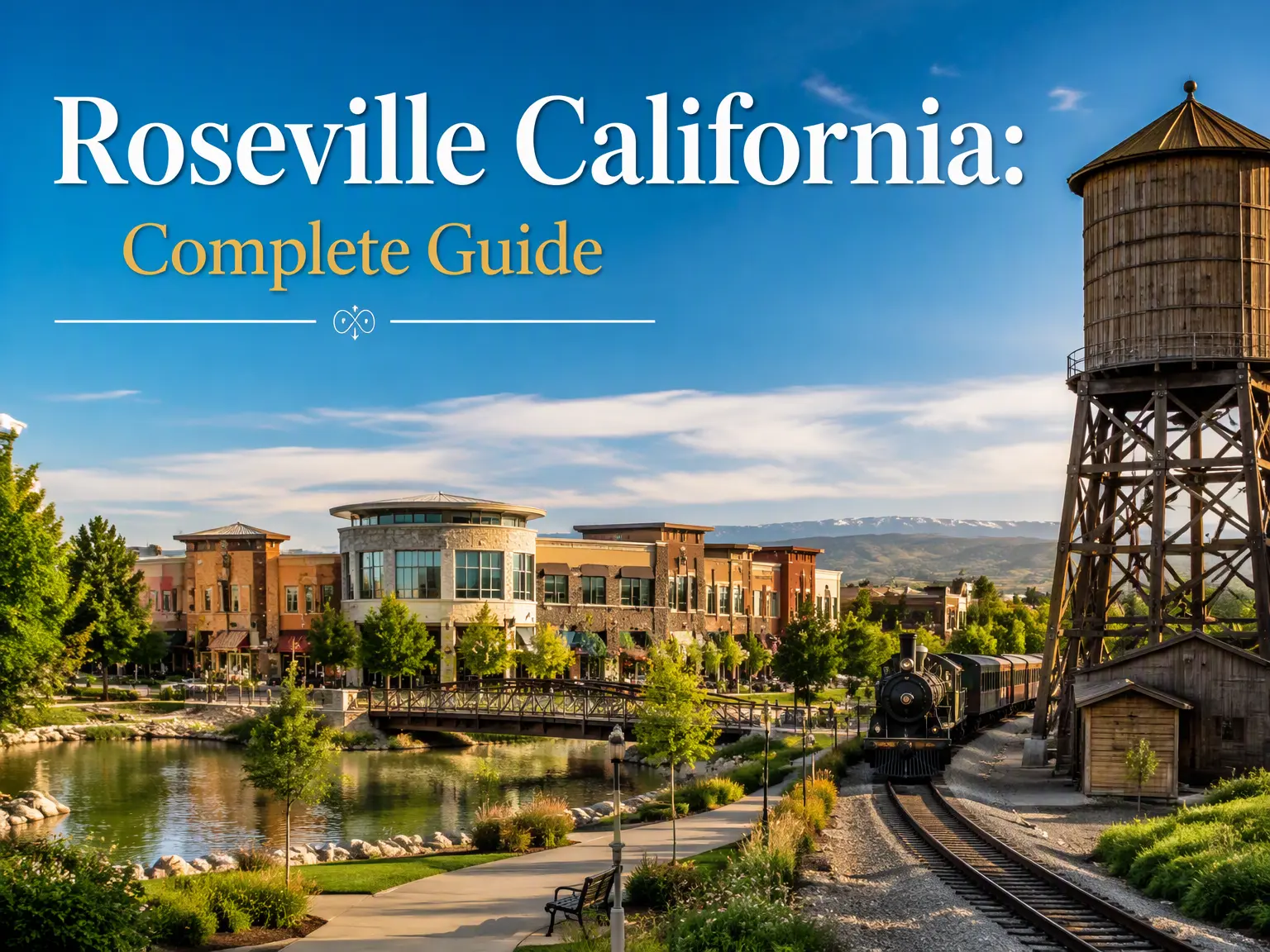
If you search for Roseville, you may find information about several places with the same name across the United States. This guide focuses on Roseville, California, a growing city in Placer County, northeast of Sacramento.
Roseville has developed from a railroad community into a large suburban city known for shopping, parks, recreation, healthcare, restaurants, schools, and easy access to the Sacramento region. The U.S. Census Bureau estimates that Roseville had 167,302 residents in July 2025, up 13.2% from its 2020 population base.
The existing competitor article covers the basics, including Roseville’s history, attractions, transportation, weather, housing, and FAQs. A stronger guide should also make the city’s location clearer, distinguish current population figures from older estimates, explain who Roseville may suit, and give readers more practical information for visiting or considering a move.
Where Is Roseville, California?
Roseville is located in Placer County in Northern California, about 20 miles northeast of Sacramento. Interstate 80 is one of the city’s most important transportation routes, connecting Roseville with Sacramento and communities farther east.
State Route 65 also provides an important north-south connection.
Its location is one reason Roseville has attracted both residents and businesses. The city is close enough to Sacramento for commuting while still offering its own shopping districts, neighborhoods, parks, restaurants, and community facilities.
Roseville is also within convenient driving distance of destinations such as:
- Sacramento
- Folsom Lake
- Auburn
- Lake Tahoe
- California’s Gold Country
- Sierra Nevada foothills
The city describes its location as approximately 20 miles northeast of Sacramento and highlights its access to the Sierra Nevada foothills, Folsom Lake, Gold Country, and other regional destinations.
Roseville Population and Growth
Roseville has experienced substantial population growth over the past several decades.
According to the U.S. Census Bureau, the city had:
- 147,773 people in the 2020 Census
- 167,302 people in the July 2025 population estimate
- A 13.2% increase from the 2020 population estimate base to July 2025
The city’s recent planning documents also show continued population growth. Roseville’s 2026 proposed budget lists a California Department of Finance estimate of 165,455 residents for 2026.
This growth can be seen in new housing developments, expanding commercial areas, transportation improvements, schools, and community facilities.
Why Is Roseville Growing?
Several factors contribute to Roseville’s growth:
- Its proximity to Sacramento
- Expanding residential neighborhoods
- Major shopping and entertainment centers
- Healthcare and employment opportunities
- Parks and recreation facilities
- Access to Interstate 80 and Highway 65
- A wide range of family-oriented services
The city is therefore more than a bedroom community. It has developed its own economy and collection of services.
A Brief History of Roseville
Roseville’s history is closely connected to the railroad.
Before modern development, the region was home to the Nisenan Maidu people, whose cultural history remains an important part of the community.
Roseville later developed around railroad operations. The Southern Pacific Railroad moved major operations from nearby Rocklin to Roseville in 1906. The railroad helped transform the community into an important transportation and employment center.
Roseville was incorporated as a city in 1909.
Today, visitors can still find reminders of this history through local museums, historic areas, and railroad-related landmarks.
The Maidu Museum & Historic Site provides an opportunity to learn about the area’s Indigenous history, while the Carnegie Museum helps tell the story of Roseville’s development.
What Is Roseville Known For?
Roseville is best known for a combination of suburban living, shopping, recreation, and regional accessibility.
Some of the city’s most recognizable features include:
Shopping
Roseville is a major shopping destination for the Sacramento region. Westfield Galleria at Roseville and The Fountains at Roseville provide extensive retail, dining, and entertainment choices.
Parks and Recreation
The city has an extensive parks and recreation system. Roseville’s official parks and recreation information includes parks, pools, sports fields, trails, libraries, cultural facilities, and community programs.
Railroad Heritage
Railroads played a major role in Roseville’s early development and remain an important part of its identity.
Downtown
Downtown Roseville offers restaurants, community events, public spaces, arts activities, and local businesses.
Location
Roseville provides relatively easy access to Sacramento and other Northern California destinations.
Things to Do in Roseville
There is more to Roseville than shopping malls. Visitors can combine history, outdoor recreation, food, entertainment, and family activities.
1. Explore Downtown Roseville
Downtown is a good place to experience a more local side of the city.
Vernon Street and surrounding areas host restaurants, businesses, public events, and community activities.
Depending on the season, visitors may find concerts, festivals, markets, and other gatherings.
2. Visit the Maidu Museum & Historic Site
The Maidu Museum is an important cultural destination in Roseville.
It focuses on the history and culture of the Nisenan Maidu people and offers visitors a different perspective on the area’s past.
3. Learn About Railroad History
Roseville’s railroad history is one of its defining historical themes.
The Carnegie Museum and other local historical resources can help visitors understand how rail transportation influenced the city’s growth.
4. Enjoy Local Parks and Trails
Outdoor recreation is another major part of Roseville.
The city provides parks, playgrounds, sports facilities, pools, trails, and other recreational spaces. Official city information describes these facilities as places for outdoor activity, community programs, and recreation for different age groups.
Popular outdoor activities include:
- Walking
- Cycling
- Jogging
- Swimming
- Youth sports
- Picnicking
- Playground activities
- Dog recreation
5. Go Shopping
For visitors who enjoy shopping, Roseville has several large commercial areas.
Westfield Galleria offers indoor shopping, restaurants, and entertainment, while The Fountains provides an open-air environment with retail and dining options.
6. Check Local Events
Roseville hosts community events throughout the year.
City event listings include activities such as concerts, festivals, family events, cultural programs, and recreational activities.
Because event dates change, visitors should check the official city calendar before making plans.
Roseville Weather
Roseville has a Mediterranean-style climate.
Summers are generally hot and dry, while winters are cooler and wetter.
The city’s official information describes summer daytime temperatures as commonly reaching the low 90s, while winter daytime temperatures are generally in the 50s.
Summer
Summer can be very hot, especially in the afternoon.
If you are visiting during summer:
- Carry water.
- Use sunscreen.
- Wear light clothing.
- Plan outdoor activities earlier or later in the day.
- Check local weather conditions before hiking or exercising outdoors.
Winter
Winter is relatively mild compared with many parts of the United States.
Rain is more common during the winter months, so a light waterproof jacket or umbrella can be useful.
Spring and Fall
Spring and fall can be comfortable seasons for exploring parks, walking around downtown, and enjoying outdoor dining.
Getting Around Roseville
Driving is generally the easiest way to explore Roseville because the city is spread across a large suburban area.
Interstate 80
I-80 provides an important connection between Roseville, Sacramento, and destinations farther east.
Highway 65
State Route 65 connects Roseville with communities including Rocklin and Lincoln.
Public Transportation
Roseville also has local and regional transportation services. Public transit can be useful for specific routes, but visitors who want to explore multiple parts of the city may find a car more convenient.
Downtown Roseville is easier to explore on foot than many of the city’s outer commercial and residential areas.
Is Roseville a Good Place to Live?
Whether Roseville is a good fit depends on your budget, work location, lifestyle, and priorities.
The city offers:
- Numerous parks
- Shopping centers
- Restaurants
- Healthcare services
- Schools
- Libraries
- Recreation programs
- Residential neighborhoods
- Access to Sacramento
- Outdoor activities
At the same time, prospective residents should consider housing costs, commuting, traffic, summer temperatures, and the city’s suburban layout.
Housing
Roseville has several types of housing, including:
- Single-family homes
- Apartments
- Townhomes
- Condominiums
- Retirement communities
- New construction
Housing costs can vary significantly by neighborhood and property type.
The competitor article cites a median owner-occupied home value of $661,400 and median gross rent of $2,142 based on 2020–2024 Census data. For anyone making a current housing decision, however, recent listings and current market data should be checked rather than relying on an older figure.
Schools and Education
Roseville has multiple schools and educational facilities serving different neighborhoods.
One important point for families is that school assignment depends on the specific address. A home advertised as being in Roseville does not automatically mean it belongs to a particular school attendance area.
Families considering a move should verify:
- Assigned elementary school
- Middle school
- High school
- School boundaries
- Transportation options
- Enrollment requirements
The city also provides libraries, recreation programs, cultural activities, and educational resources for residents.
Healthcare and Employment
Healthcare is an important part of Roseville’s local economy.
The city also has employment across sectors such as:
- Retail
- Healthcare
- Education
- Government
- Professional services
- Hospitality
- Technology
- Small business
Some residents work within Roseville, while others commute to Sacramento and surrounding communities.
This combination gives Roseville a broader economic base than a typical residential suburb.
Roseville for Families
Roseville has many features that can appeal to families.
Families can find:
- Parks
- Playgrounds
- Swimming facilities
- Sports programs
- Libraries
- Schools
- Museums
- Community events
- Family entertainment
- Shopping and restaurants
The city also operates recreation programs for different age groups, making it possible to find activities beyond traditional sightseeing.
However, families should still compare housing prices, school boundaries, commute times, and childcare availability before moving.
Roseville vs. Sacramento
Roseville and Sacramento are separate cities.
Roseville is in Placer County, while Sacramento is the capital city of California and lies to the southwest.
| Feature | Roseville | Sacramento |
|---|---|---|
| County | Placer County | Sacramento County |
| General character | Suburban | Urban and metropolitan |
| Major road connection | I-80, Highway 65 | I-5, US-50 and others |
| Shopping | Extensive | Extensive |
| Parks | Extensive | Extensive |
| Downtown environment | Smaller local downtown | Large urban downtown |
| Regional access | Strong | Strong |
| Nearby metro | Sacramento region | Sacramento region |
The two cities are closely connected economically and geographically, but they offer different day-to-day environments.
Best Time to Visit Roseville
There is no single perfect time for every visitor.
Spring and fall can be especially comfortable for outdoor activities because temperatures are generally more manageable than during the hottest summer periods.
Summer works well for visitors who enjoy warm weather, pools, and outdoor recreation, but afternoon heat should be considered.
Winter can be useful for travelers who prefer cooler temperatures and don’t mind occasional rain.
If your trip revolves around a specific festival, concert, sporting event, or family activity, the event schedule should determine your travel dates.
Practical Tips Before Visiting Roseville
A few simple preparations can make a trip easier.
Check the weather
Summer heat can be significant, particularly for outdoor activities.
Plan your route
Roseville is spread out. Grouping nearby attractions together can reduce driving time.
Check event schedules
Local events can change throughout the year. Check official listings before visiting.
Allow time for shopping
If you plan to visit Westfield Galleria or another major shopping area, remember that these destinations can take several hours.
Consider a car
Public transportation exists, but driving can be more convenient for visitors who want to cover several parts of the city.
Is Roseville the Same as Other Rosevilles?
No.
There are multiple communities named Roseville in the United States, including Roseville, California, Roseville, Minnesota, and Roseville, Michigan.
This guide is specifically about Roseville, California.
That distinction matters because the cities have different climates, histories, attractions, transportation systems, and local governments.
For example, Roseville, Minnesota is located between Minneapolis and Saint Paul and is known for its parks, shopping, and access to the Twin Cities. Roseville, Michigan is a separate community in the Detroit metropolitan area.
Frequently Asked Questions About Roseville
Where is Roseville, California?
Roseville is in Placer County, Northern California, approximately 20 miles northeast of Sacramento.
What is Roseville, California known for?
Roseville is known for its railroad history, shopping centers, parks, recreation facilities, residential communities, healthcare services, and proximity to Sacramento.
How many people live in Roseville?
The U.S. Census Bureau estimates Roseville’s population at 167,302 as of July 1, 2025.
Is Roseville part of Sacramento?
No. Roseville is a separate city in Placer County. It is, however, part of the broader Sacramento metropolitan region.
Is Roseville good for families?
Roseville offers parks, schools, libraries, recreation programs, museums, sports facilities, and family entertainment. Families should also compare housing, school boundaries, childcare, and commute requirements.
What are the main things to do in Roseville?
Popular options include exploring Downtown Roseville, visiting the Maidu Museum, learning about railroad history, enjoying parks and trails, shopping, dining, and attending local events.
Does Roseville have hot summers?
Yes. Roseville experiences hot, dry summers, with the city’s official information describing typical summer daytime highs in the low 90s.
Can you visit Roseville without a car?
It is possible, particularly if you stay around a specific area. However, because Roseville is geographically spread out, a car can make it easier to visit multiple attractions, shopping areas, parks, and neighborhoods.
Final Thoughts
Roseville, California is a growing Northern California city that combines suburban neighborhoods with major shopping, recreation, cultural attractions, and convenient regional access.
Its railroad roots help explain how the community developed, while its modern parks, residential areas, businesses, and entertainment options show how much the city has changed.
For visitors, Roseville can work as both a destination and a convenient base for exploring the Sacramento region. For people considering a move, the city offers many everyday amenities, but housing costs, transportation, schools, commute times, and climate deserve careful consideration.
The biggest takeaway is that Roseville is not simply a suburb next to Sacramento. It has developed its own identity, economy, recreation system, and community life while remaining closely connected to the larger Northern California region.