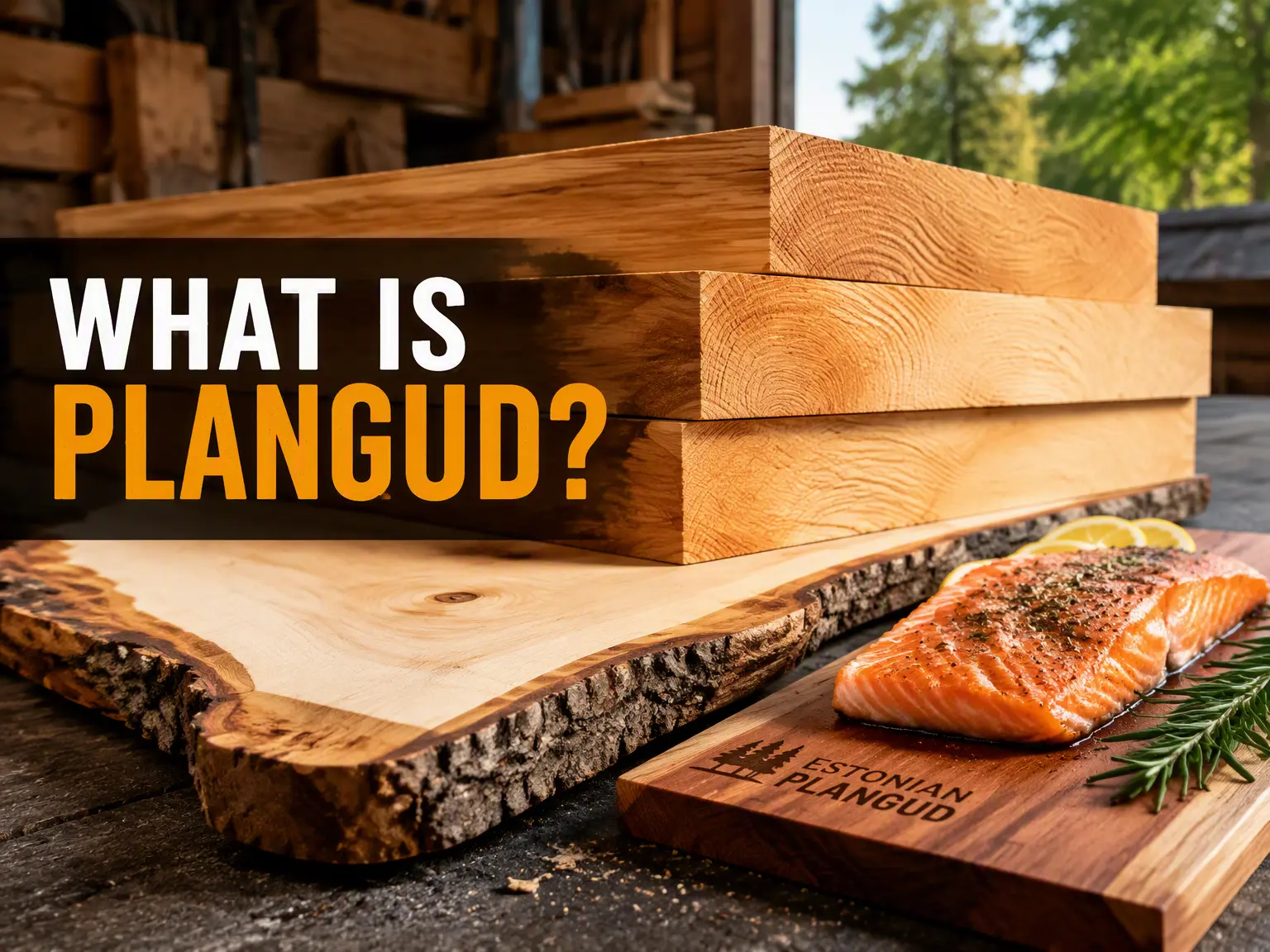
If you’ve stumbled on the word plangud while browsing a timber listing or a grilling forum, you’re not alone. Plangud is simply the Estonian plural of “plank,” and it shows up in two very different worlds: raw wood sold by sawmills and thin boards used for cooking fish on a grill. There’s no single product hiding behind the term. Instead, the meaning shifts depending on who’s using it and why. A furniture maker, a builder, and a home cook could all type “plangud” into a search bar and expect three completely different results. This guide walks through what the word actually covers in each setting, so you know exactly what you’re paying for before you commit to a purchase.
What Does Plangud Mean?
Plangud translates directly to “planks” or “boards” in English. It’s not a brand name, a company, or a specific product line — it’s an everyday material word used across Estonia’s timber and food industries. You’ll often see it paired with other Estonian terms like plankudest (“from planks”) or servamata plangud (“unedged planks”), each one narrowing down what’s actually being described. On its own, the word tells you almost nothing about species, thickness, or finish quality. That’s why context matters so much here. A sawmill’s price list, a furniture workshop’s product page, and a grilling accessory store will all use plangud slightly differently, and reading past the headline word is the only real way to know what you’re looking at before you buy anything with that label attached.
Plangud in Timber and Sawmill Work
In the timber trade, plangud usually refers to thick boards cut straight from logs. These pieces can be sold rough and unfinished, kiln-dried, planed smooth on all sides, or left with a natural, uneven edge for a more rustic look. Estonian sawmills commonly offer this kind of timber for building projects, furniture bases, decking, and interior wall panels. Thickness alone doesn’t guarantee quality, though. Grain pattern, knot placement, and how evenly the wood dried all affect how a board performs once it’s cut, joined, or put under real weight. Two boards from the exact same batch can look and behave quite differently once they leave the mill. Buyers planning to use plangud structurally, rather than just decoratively, should ask suppliers for drying records and inspect each board individually before it ever reaches a saw or a workbench.
Understanding Servamata Plangud
Servamata plangud refers to unedged boards, meaning at least one long side still carries the tree’s original, irregular outline instead of a straight machine-cut edge. Sellers often list unedged ash, oak, or pine in thicknesses around 50 to 70 millimeters, sold specifically for furniture work. These boards appeal to people building dining tables, waterfall countertops, or rustic shelving, since the natural edge gives each piece a one-of-a-kind look that a straight-cut board simply can’t replicate. That character comes with extra labor, though. Loose bark needs to be stripped away carefully, soft or rotten spots checked thoroughly, and the board often needs flattening before it can sit level or be joined cleanly to another piece. Buying unedged plangud really means buying a partly finished project rather than a ready-to-use material, so factor that extra prep time into your overall budget.
Common Wood Species Used for Plangud
Species choice shapes everything from strength to price to final appearance. Pine and spruce dominate general construction because they’re affordable and widely available across Northern Europe. Birch offers a pale, even tone popular for modern furniture pieces, while oak brings density and durability suited to items meant to last for decades without warping. Ash shows dramatic, bold grain lines that many designers favor for statement tabletops, and alder, being softer and naturally food-safe, crosses over into grilling boards as well. No single species wins every job outright, so matching the wood to its intended purpose matters far more than chasing whatever gets labeled the “best” option online. Price, weight, and how the wood reacts to moisture over time should factor into the decision too. The table below breaks down how these common species typically get used across different projects.
| Wood Species | Typical Hardness | Common Use |
|---|---|---|
| Pine | Soft | General construction, framing |
| Spruce | Soft | Building work, budget furniture |
| Birch | Medium | Modern furniture, wall panels |
| Oak | Hard | Long-life furniture, flooring |
| Ash | Medium-Hard | Statement tabletops, tool handles |
| Alder | Soft | Grilling boards, light furniture |
Standard Thickness and Sizing of Plangud
There’s no fixed dimension attached to the word plangud, since it describes a whole category of products rather than one standardized item. Estonian sawn-timber sellers typically list boards ranging from about 14 to 100 millimeters thick, with unedged furniture-grade pieces most often falling somewhere between 45 and 70 millimeters. Thicker boards feel sturdier underfoot or beneath a tabletop, but they also weigh considerably more, take longer to dry all the way through, and shift more noticeably as humidity changes across the seasons. Wide, thick boards stored improperly can cup, bow, or twist long before they ever reach a workshop bench. Before ordering, it’s worth asking suppliers directly for the exact thickness, width, and moisture content rather than estimating dimensions from a listing photo, since camera angles routinely make boards look larger than they actually turn out in person once delivered.
Plangud for Furniture and Building Projects
Furniture makers gravitate toward thick plangud because a single quality slab can become a striking tabletop with only minimal extra shaping required. Smaller offcuts get repurposed into stools, floating shelves, window seats, or side tables, letting a workshop use nearly every piece of a purchased board without waste. Planed timber, finished smooth on all four sides, saves considerable workshop time since it arrives already measured, squared, and ready to join or finish immediately. For building applications, plangud commonly appears in fencing, garden steps, raised platforms, and outdoor furniture frames across many climates. Outdoor projects specifically need good airflow and drainage, since end grain sitting in damp soil will rot far faster than properly elevated, well-ventilated wood. Rough, unfinished timber costs less upfront but demands considerably more tools, sanding, and labor before it becomes usable, so weigh that trade-off against your own workshop time.
Grill Plangud: Wooden Boards for Cooking
In a kitchen context, grill plangud are food-safe wooden boards placed directly on a grill grate, letting food cook on damp wood instead of sitting on bare metal. As the board slowly heats, it releases a subtle smoky aroma into the food while shielding delicate items like salmon fillets from direct, harsh heat exposure. Plank grilling has become especially popular for fish, since the wood also stops thin fillets from falling straight through the grates below. Safe grilling boards are typically made from cedar, alder, maple, or beech, and they’re always sold untreated and completely chemical-free for food safety reasons. Painted, glued, stained, or pressure-treated wood should never touch a grill, since burning chemical coatings can transfer directly into whatever is cooking, creating a genuine health risk rather than just a minor flavor problem worth ignoring.
How to Choose and Store Plangud
Start by deciding exactly what the board needs to do, since a tabletop, a fence rail, and a salmon plank all call for entirely different wood. Once the purpose is clear, compare species, thickness, moisture level, and edge style rather than picking based on price alone. Run your eyes down the full length of any timber board, checking carefully for twisting, deep splits, soft rot, or weak knots that could fail under load later. For cooking boards specifically, confirm the label clearly states the wood is untreated and food-safe, with no noticeable chemical smell. Once purchased, store timber flat on level supports with spacer sticks between layers, keeping the whole stack off concrete floors and away from direct rain exposure to prevent unwanted warping before you ever get to use it.
Frequently Asked Questions
What does plangud mean in English?
Plangud is the Estonian plural word for “planks” or “boards.” It’s not a brand or a specific product — it’s a general material term. The exact meaning always depends on context, whether that’s a timber listing, a furniture description, or a grilling product page.
Is plangud always made from a specific wood species?
No. Plangud can be made from pine, spruce, birch, oak, ash, or alder, depending on the seller and intended use. Structural or building boards often use softwoods like pine, while furniture-grade or grilling boards may use hardwoods or food-safe species instead.
Can plangud be used safely for grilling food?
Only if the board is specifically sold as untreated, food-safe grilling wood, usually cedar, alder, maple, or beech. Regular construction-grade plangud should never touch a grill, since it may contain glue, stain, or chemical treatments that are unsafe when heated.
How thick should plangud be for a tabletop?
Furniture-grade plangud used for tabletops typically ranges between 45 and 70 millimeters thick. Thicker boards feel sturdier but weigh more and take longer to dry evenly, so the right thickness depends on the table’s size and intended use.
What is the difference between plangud and servamata plangud?
Plangud is the general term for planks or boards, while servamata plangud specifically refers to unedged boards that keep part of the tree’s natural, irregular outline instead of a straight machine-cut edge on both long sides.
Do I need to soak grill plangud before cooking?
Yes. Most grilling boards need to soak fully in water for at least 30 minutes, and often closer to an hour, before use. Soaking slows down burning and helps the board smoulder gently instead of catching fire on the grill.
How should I store plangud to prevent warping?
Store timber plangud flat on level supports, with spacer sticks between each layer to allow airflow. Keep the stack off concrete floors and away from direct rain or sun exposure, since sudden humidity changes can cause cracking or warping.
Conclusion
Plangud isn’t a mysterious product or a hidden brand name — it’s simply the Estonian word for planks, and its exact meaning depends entirely on the surrounding context. In timber work, it points to thick sawn boards used for furniture, construction, and design projects of all kinds. In the kitchen, it describes food-safe wooden boards designed specifically for grilling fish and other delicate foods over open heat. The species, thickness, moisture level, and finish all matter more than the label itself ever will. Whether you’re sourcing plangud for a dining table or a summer cookout, taking time to check these details before buying will save you real disappointment later. Once you understand the context, plangud stops being confusing and becomes just another practical material worth knowing before you ever place an order.