
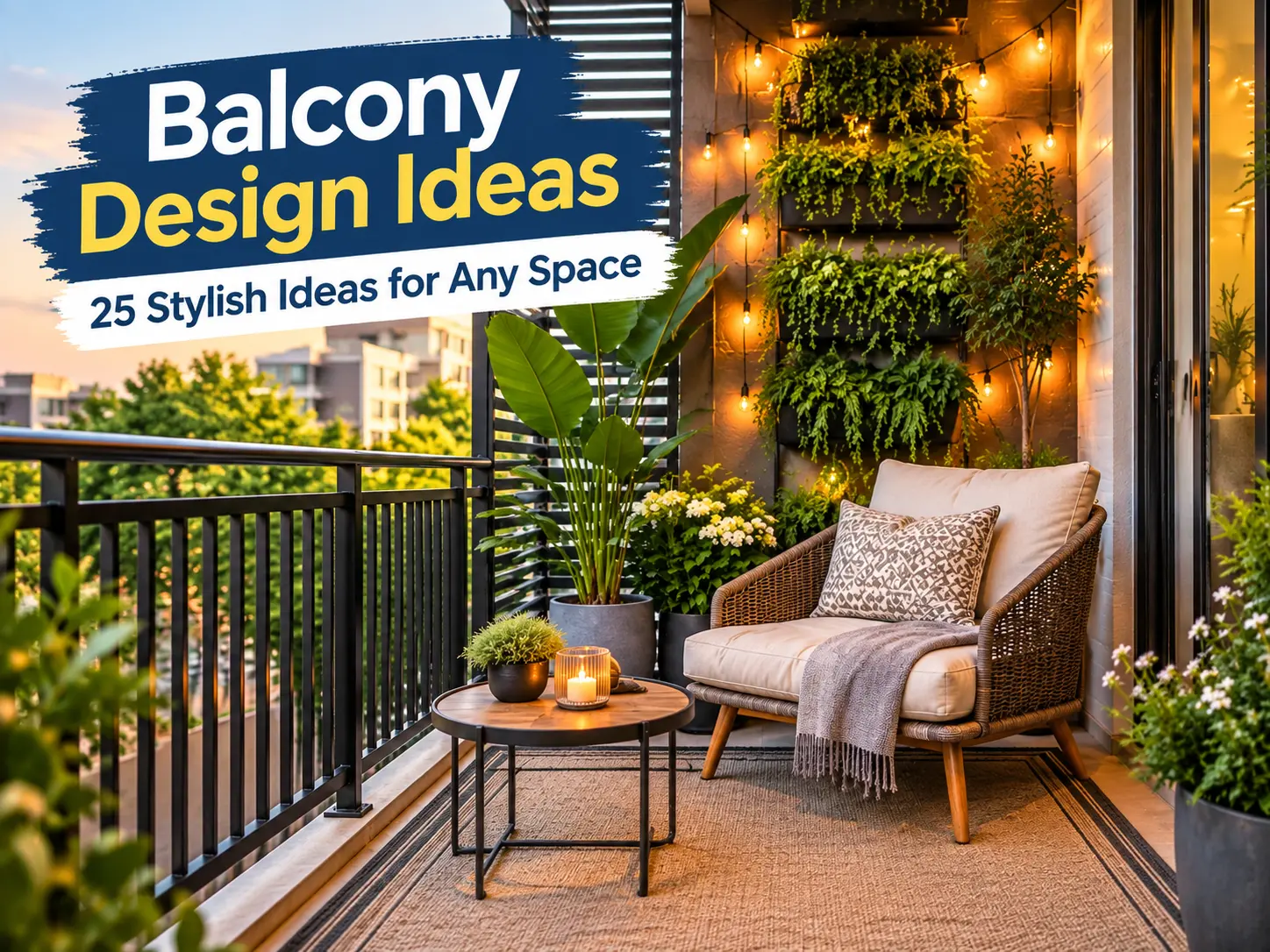
A balcony can be much more than a narrow outdoor area attached to your home. With the right layout, furniture, plants, lighting, and privacy solutions, even a small balcony can become a comfortable place to drink coffee, read, work, entertain guests, or simply relax.
The best balcony design ideas do not depend on having a large space. They focus on using every inch wisely. Current design guidance also emphasizes compact furniture, vertical greenery, privacy, weather-resistant materials, and renter-friendly improvements.
This guide covers ideas for small apartment balconies, modern homes, renters, families, and anyone who wants to create a more inviting outdoor space.
25 Balcony Design Ideas to Try
1. Create a Cozy Seating Corner
Start with the most important question: How do you want to use your balcony?
If relaxation is the goal, create a simple seating corner with one or two comfortable chairs and a small side table.
For a narrow balcony, avoid oversized sofas. A compact lounge chair, folding chair, or small loveseat can provide plenty of comfort without blocking the walkway.
Add an outdoor cushion and a small rug to make the area feel more like an extension of your home.
2. Use Foldable Balcony Furniture
Foldable furniture is one of the smartest choices for a small balcony.
A folding table can provide a place for breakfast or coffee and then disappear against a wall when you need more floor space.
Consider:
- Folding bistro tables
- Folding chairs
- Stackable stools
- Drop-leaf tables
- Folding loungers
This approach gives you flexibility without filling the balcony with permanent furniture.
3. Add a Small Bistro Set
A compact bistro table with two chairs can instantly turn an unused balcony into a breakfast or coffee spot.
Choose a round or square table depending on the available space. For especially narrow balconies, look for a table that can fold flat.
This setup works particularly well for apartment balconies where every square foot matters.
4. Build a Vertical Balcony Garden
Don’t let limited floor space stop you from adding plants.
Use the walls and railings instead.
You can install:
- Wall-mounted planters
- Hanging baskets
- Vertical plant stands
- Railing planters
- Trellis panels
- Small herb gardens
Vertical gardening adds greenery without consuming the walking area. It can also soften hard concrete walls and make the balcony feel more natural.
5. Use Plants for Privacy
Plants can perform two jobs at once: decoration and privacy.
Tall plants, railing planters, and climbing vines can create a softer screen between your balcony and neighboring buildings.
For apartment balconies, choose plants that suit your sunlight and local climate rather than selecting them only for appearance.
Layer plants at different heights to create a fuller look without overcrowding the floor.
6. Add a Privacy Screen
Privacy is one of the biggest problems with urban balconies.
A privacy screen can make the space feel more comfortable, especially when neighboring apartments overlook your balcony.
Popular options include:
- Outdoor fabric screens
- Bamboo or reed panels
- Slatted screens
- Freestanding panels
- Outdoor curtains
- Tall planters
If you rent, choose removable options and check your lease or building rules before installing anything permanent.
7. Hang Outdoor Curtains
Outdoor curtains can give a balcony a softer and more private appearance.
They are particularly useful when you want to block a specific sightline rather than completely enclose the balcony.
Choose outdoor-rated fabric that can handle sunlight and moisture. Leave enough room for airflow instead of creating a completely enclosed space.
8. Make the Balcony Feel Like an Outdoor Living Room
One of the easiest ways to improve balcony design is to treat the space like a small outdoor room.
Add:
- A comfortable chair
- An outdoor rug
- Cushions
- A side table
- Plants
- Warm lighting
- A small decorative accent
The goal is not to copy your indoor living room. Instead, carry a few colors and textures outside so the two spaces feel connected.
9. Add an Outdoor Rug
A balcony rug can make a large visual difference.
It helps define the seating area while covering an unattractive concrete floor. Choose a rug designed for outdoor use and make sure it fits without interfering with doors or drainage.
For a small balcony, a simple pattern can add personality without making the space look busy.
10. Try a Modern Minimalist Balcony
If you prefer a clean look, keep the design simple.
Use:
- Neutral colors
- Slim furniture
- One or two plant varieties
- Simple lighting
- Minimal decoration
Instead of filling every corner, leave some open space. This makes a compact balcony appear larger and more organized.
11. Create a Boho Balcony
For a warmer, relaxed style, try a boho-inspired design.
Combine:
- Woven furniture
- Textured cushions
- Outdoor rugs
- Hanging plants
- Lanterns
- Natural wood
- Soft neutral colors
The key is layering textures rather than adding too many individual decorations.
12. Design a Modern Luxury Balcony
You do not need a huge terrace to create a sophisticated look.
Choose a small number of high-quality pieces:
- Sleek outdoor seating
- A structured rug
- Large planters
- Subtle lighting
- Coordinated cushions
A consistent color palette often makes a bigger difference than expensive furniture.
13. Turn the Balcony Into a Breakfast Spot
A tiny balcony can become a useful dining area.
Place a small table close to the railing and use two compact chairs. If the balcony is extremely narrow, consider a slim table rather than a traditional patio dining set.
This setup is perfect for morning coffee, breakfast, or an evening drink.
14. Create a Reading Nook
If you want a quiet escape, design the balcony around one comfortable chair.
Add a small table for your book or coffee, a soft outdoor cushion, and a lamp or lantern.
You do not need multiple pieces of furniture. One comfortable seat can become the focal point.
15. Add Warm String Lights
Lighting can completely change the mood of a balcony after sunset.
String lights are a popular choice because they provide soft illumination without requiring large fixtures.
You can also use:
- Lanterns
- Solar lights
- Battery-powered lamps
- LED candles
- Small wall lights where permitted
Avoid excessive lighting. A few strategically placed lights usually create a more relaxing atmosphere.
16. Use a Small Balcony for Gardening
A balcony can become a productive mini garden.
Depending on your sunlight and climate, you might grow:
- Basil
- Mint
- Rosemary
- Thyme
- Peppers
- Tomatoes
- Flowers
Use railing planters, hanging containers, and vertical shelves to keep the floor open.
17. Add a Storage Bench
Storage is often overlooked in balcony design.
A storage bench can provide seating while hiding items such as:
- Outdoor cushions
- Gardening tools
- Blankets
- Small accessories
- Plant supplies
This is especially useful when you do not have a separate outdoor storage area.
18. Use Multi-Purpose Furniture
Small balconies benefit from furniture that performs more than one job.
For example, an ottoman can provide seating, a footrest, and storage. A bench can provide seating and hold gardening supplies.
Before buying something, ask:
Can this piece solve two problems instead of one?
That simple question can prevent unnecessary clutter.
19. Make a Rental-Friendly Balcony
Renters often have restrictions on drilling, painting, or making permanent changes.
Fortunately, you can still make major improvements.
Try:
- Freestanding privacy screens
- Removable outdoor rugs
- Portable planters
- Folding furniture
- Tension-mounted curtains where appropriate
- Battery-powered lights
- Removable decorative items
Always check your lease and building rules before making changes. Renter-focused balcony guidance similarly recommends measuring the space first and choosing reversible improvements.
20. Make a Narrow Balcony Look Bigger
A narrow balcony does not have to feel cramped.
Try these tricks:
- Choose slim furniture
- Keep the center walkway open
- Use vertical plants
- Stick to a coordinated color palette
- Use one appropriately sized rug
- Place taller elements along the edges
- Avoid excessive decoration
The biggest mistake is trying to squeeze too many things into a small footprint.
21. Add a Small Work-From-Home Area
If you have a covered balcony with suitable weather protection, it can become a temporary outdoor workspace.
Use a compact table, comfortable chair, and reliable shade.
Keep electronics protected from moisture and direct sunlight. A balcony workspace should also have a backup indoor option for bad weather.
22. Create a Pet-Friendly Balcony
If your pet uses the balcony, safety should come before decoration.
Check railings and openings carefully. Do not rely on furniture as a barrier.
You can create a comfortable pet corner with a washable outdoor mat, shaded resting area, and water bowl.
If you install a pet enclosure or barrier, make sure it is secure and allowed by your building or landlord.
23. Add Shade for Hot, Sunny Balconies
A beautiful balcony is not useful if it becomes unbearably hot.
Depending on the balcony and building rules, consider:
- Outdoor umbrellas
- Shade sails
- Outdoor curtains
- Retractable shades
- Bamboo-style screening
Pay attention to the direction of the sun. A balcony facing strong afternoon sunlight may need more protection than one that receives gentle morning sun.
24. Choose Weather-Resistant Materials
Balcony furniture faces more exposure than indoor furniture.
Look for materials and finishes designed for outdoor use. Powder-coated metal, weather-resistant synthetic materials, treated wood, and outdoor-rated fabrics can be practical choices.
Also think about maintenance. A beautiful material that requires constant care may not be the best option for your lifestyle.
25. Design the Balcony Around One Main Purpose
This may be the most important idea of all.
Do not try to make a small balcony into a lounge, dining room, garden, office, storage room, and entertainment area at the same time.
Choose its primary purpose:
Relaxing: comfortable chair + plants + lighting
Dining: compact table + two chairs
Gardening: vertical planters + shelves + storage
Privacy: screening + plants + comfortable seating
Working: compact desk + chair + shade
Once the main purpose is clear, the rest of the design becomes much easier.
Balcony Design Ideas for Different Sizes
Very Small Balcony
For a tiny balcony, prioritize:
- One or two seats
- Foldable furniture
- Vertical plants
- Small lighting
- A narrow rug
Keep the floor as open as possible.
Medium Balcony
A medium-sized balcony gives you more flexibility.
You can create separate zones for seating and plants or combine a small dining area with a lounge chair.
Use furniture to define each zone rather than adding walls or bulky dividers.
Large Balcony
With a larger balcony, you can create several functional areas.
For example:
Zone 1: Dining table
Zone 2: Lounge seating
Zone 3: Plants and gardening
Zone 4: Outdoor storage
Keep enough space between each area so the balcony still feels open.
How to Choose the Right Balcony Furniture
Before buying furniture, measure the balcony.
Measure:
- Width
- Depth
- Door swing
- Railing position
- Available walking space
- Drainage areas
Do not measure only the empty floor. A chair that technically fits may still make the balcony uncomfortable if it blocks the door or walkway.
For small spaces, folding, stackable, and multifunctional furniture tends to be more practical than large patio sets.
How to Make a Balcony More Private Without Making It Feel Closed
The best privacy solution does not necessarily block everything.
Instead, identify exactly what you want to hide.
If neighbors can see directly into the seating area, screen that section rather than covering the entire railing.
Plants, partial screens, outdoor curtains, and slatted panels can block sightlines while maintaining light and airflow.
This creates privacy without making the balcony feel like a closed room.
Common Balcony Design Mistakes to Avoid
Buying Furniture Before Measuring
A beautiful chair is useless if it blocks the balcony door.
Using Too Many Plants
Plants are attractive, but too many pots can quickly consume your walking space.
Ignoring the Weather
Outdoor furniture must suit the conditions where you live.
Forgetting Privacy
If the balcony feels exposed, you may stop using it regardless of how attractive it looks.
Blocking Drainage
Never place rugs, furniture, or storage in a way that prevents water from draining properly.
Overdecorating
Small spaces usually look better with a few intentional pieces than dozens of decorations.
Ignoring Building Rules
Apartment communities and rental properties may have restrictions on screens, furniture, lights, grills, and permanent installations.
How Much Does It Cost to Design a Balcony?
The cost depends heavily on the balcony size and what you already own.
A simple refresh can involve only a rug, plants, cushions, and lighting. A larger makeover may include new furniture, privacy screens, flooring, shade, and storage.
A practical way to control the budget is to upgrade in stages:
Step 1: Clean and measure the space.
Step 2: Choose the main purpose.
Step 3: Buy the most important furniture.
Step 4: Add plants and privacy.
Step 5: Finish with lighting and accessories.
This prevents you from spending money on items that do not fit your final layout.
What Is the Best Color for a Balcony?
There is no single best color.
For a small balcony, lighter neutrals such as white, beige, cream, light gray, or natural wood tones can create an airy appearance.
Darker colors can work well when used as accents.
A good approach is to select two or three main colors and repeat them across the furniture, rug, cushions, and planters.
What Plants Are Best for a Balcony?
The best balcony plants depend on sunlight, temperature, wind, container size, and how much care you want to provide.
Before buying plants, determine whether your balcony receives:
- Full sun
- Partial sun
- Mostly shade
- Strong wind
Then select plants suited to those conditions.
For edible plants, herbs can be particularly practical because they do not require much space.
Frequently Asked Questions
How can I make a small balcony look nice?
Use compact furniture, vertical plants, a small outdoor rug, warm lighting, and one consistent color palette. Avoid filling every inch of the floor.
What furniture is best for a small balcony?
Foldable chairs, bistro tables, stackable stools, slim benches, and multifunctional storage furniture are excellent choices for compact balconies.
How do I make my balcony more private?
Try outdoor curtains, privacy screens, tall planters, railing covers, or climbing plants. Choose a solution that blocks the specific sightline while maintaining airflow.
How can I decorate a balcony cheaply?
Start with plants, cushions, string lights, a small rug, and secondhand or existing furniture. You do not need to replace everything at once.
How do I make a narrow balcony feel bigger?
Keep the center open, use slim furniture, move greenery upward, reduce visual clutter, and use a coordinated color scheme.
Can renters decorate their balconies?
Usually, renters can make many temporary changes, but rules vary by property. Check the lease and community regulations before installing screens, lights, flooring, or anything that attaches permanently.
Should I put a rug on my balcony?
An outdoor-rated rug can add warmth and visually define the seating area. Make sure it does not interfere with drainage or create a trip hazard.
What is the most important part of balcony design?
Start with function. Decide whether you primarily want a place to relax, dine, garden, work, or enjoy privacy. Then choose furniture and décor around that purpose.
Final Verdict
The best balcony design ideas are not necessarily the most expensive or complicated. A successful balcony uses its limited space intelligently.
Start by measuring the area and deciding how you want to use it. Choose appropriately sized furniture, add greenery without sacrificing floor space, solve privacy problems, and use lighting to make the space inviting after dark.
Whether you have a tiny apartment balcony or a spacious outdoor terrace, thoughtful planning can turn an overlooked area into one of the most enjoyable parts of your home.