The pharmaceutical industry is becoming increasingly data-driven. Drug discovery, clinical research, patient insights, commercial operations, and safety monitoring all depend on the ability to collect and analyze large amounts of information.
This is where the relationship between Eisai and Databricks becomes interesting.
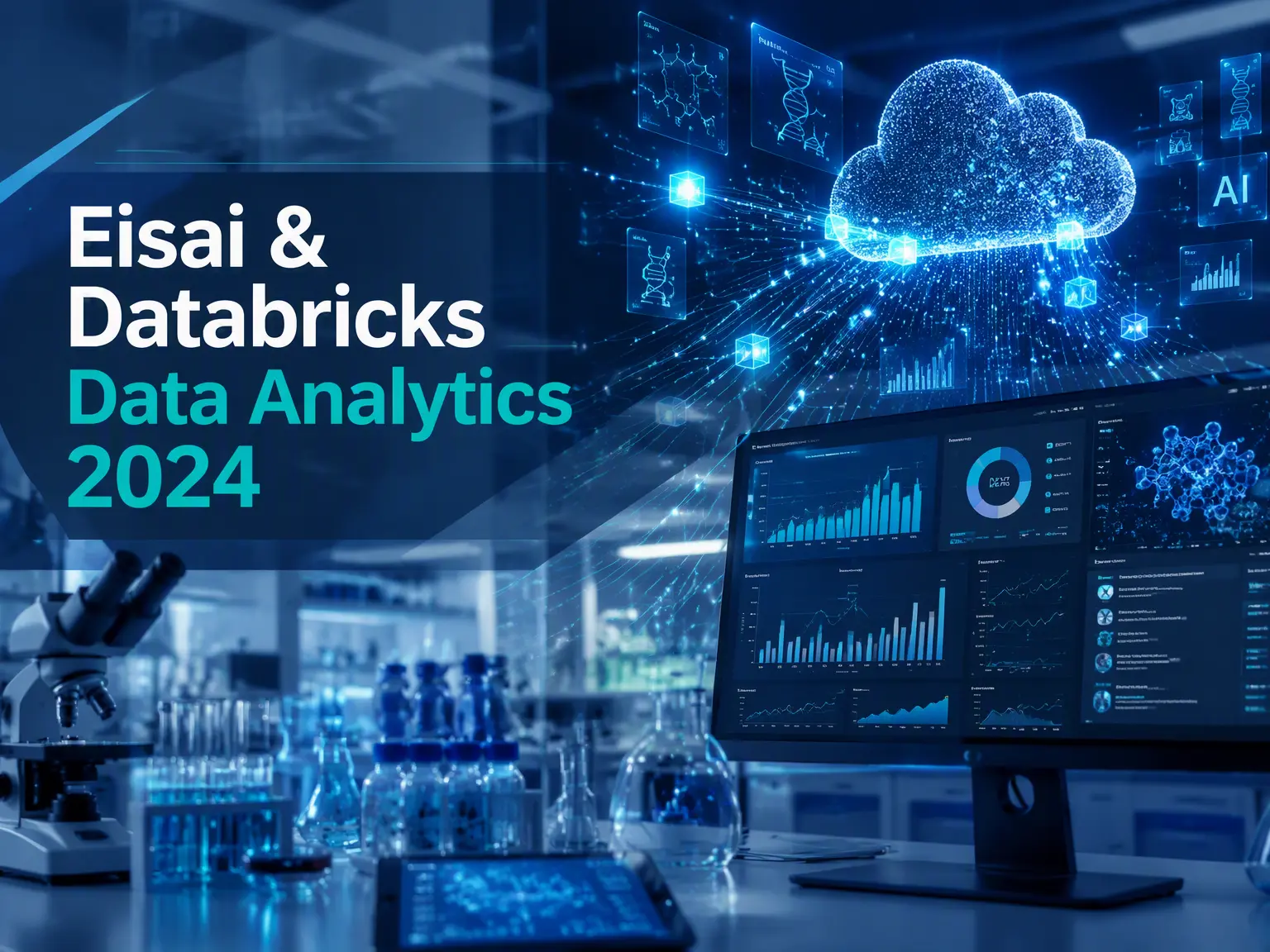
Eisai, a global pharmaceutical company known for its focus on human health care, has incorporated Databricks into its data and analytics environment. Databricks provides a modern platform for working with large datasets, advanced analytics, machine learning, and artificial intelligence.
However, there is an important detail that is often missed when discussing the Eisai pharmaceutical company and Databricks data analytics partnership in 2024: available evidence does not establish that Eisai and Databricks announced a brand-new partnership agreement in 2024. Instead, the evidence points to an existing relationship that continued to develop as Eisai expanded its data, analytics, and AI capabilities. Databricks has previously identified Eisai among its healthcare and life-sciences customers.
So, what does this relationship actually mean? And how can Databricks support a pharmaceutical company such as Eisai?
What Is the Eisai and Databricks Relationship?
Eisai is a Japanese pharmaceutical company with major operations across global markets. Its work includes areas such as neurology, oncology, and other fields of human health.
Databricks is a data and AI platform designed to help organizations bring data together, analyze it at scale, and build machine-learning and AI applications.
The relationship is best understood as a technology and data-platform relationship rather than a newly announced 2024 partnership.
Databricks has listed Eisai among organizations using its platform in healthcare and life sciences. Its life-sciences materials have also highlighted use cases involving real-world evidence, advanced analytics, machine learning, and clinical data.
More recent Eisai hiring information provides additional evidence of the company’s continued use of Databricks. Eisai describes Databricks as part of its data and AI technology environment and specifically references Databricks Lakehouse, Delta Lake, Unity Catalog, workflows, AI/ML, and data governance.
Why Does Databricks Matter to a Pharmaceutical Company?
Pharmaceutical companies generate enormous amounts of data.
This can include:
- Clinical trial information
- Laboratory research data
- Genomic and molecular data
- Real-world patient data
- Commercial and sales information
- Safety and adverse-event information
- Scientific publications
- Research and development data
- Medical and healthcare datasets
Traditionally, this information can exist across different systems and departments.
That creates a major challenge.
Researchers may have one dataset, clinical teams another, and commercial teams another. Bringing those sources together can take significant time.
A modern data platform can help create a more connected environment for analyzing information.
For a company such as Eisai, this can support better data access while also providing a foundation for analytics, machine learning, and AI.
How Databricks Can Support Eisai’s Data Strategy
The value of Databricks goes beyond simply storing information.
Its platform can provide capabilities for data engineering, analytics, machine learning, AI development, and governance.
Eisai’s current technology roles specifically reference Databricks as part of its enterprise data and AI architecture. The company is also seeking expertise in Databricks alongside AWS, Informatica, Tableau, and other data technologies.
This suggests that Databricks is part of a broader technology ecosystem rather than a standalone solution.
1. Bringing Data Together
A pharmaceutical company may need to analyze information from many different sources.
A lakehouse-based architecture can help organizations create a more unified environment for data.
Instead of forcing every team to work independently, data can be prepared and made available for different analytical workloads.
This is especially useful when researchers need to work with large and complex datasets.
2. Supporting Advanced Analytics
Data analytics can help pharmaceutical organizations identify patterns that may not be obvious through manual analysis.
For example, analytical systems can be used to examine:
- Patient populations
- Clinical research data
- Treatment patterns
- Safety signals
- Research results
- Commercial performance
- Operational trends
The goal is not simply to collect more data. The goal is to turn data into useful information for decision-making.
3. Machine Learning and AI
Modern pharmaceutical research increasingly uses machine learning and artificial intelligence.
Databricks provides tools for developing and operating machine-learning and AI workloads.
Eisai’s current technology requirements explicitly include AI/ML and generative AI capabilities within its Databricks environment.
This creates opportunities for AI-assisted research, analytics, automation, and decision support.
It is important, however, not to assume that every possible AI use case has been publicly confirmed as an Eisai production project.
Databricks and Pharmaceutical Research
One of the strongest reasons data platforms matter in life sciences is the complexity of pharmaceutical research.
Researchers can work with different forms of information at the same time.
For example, a research project may involve:
- Experimental results
- Biological information
- Clinical data
- Scientific literature
- Patient outcomes
- Historical research records
Analyzing these sources together can potentially help research teams identify patterns more efficiently.
Databricks’ own life-sciences material highlights use cases such as real-world evidence, clinical trial recruitment, adverse-event detection, and analysis of healthcare records. Eisai is listed among the healthcare and life-sciences organizations associated with the platform.
Real-World Evidence and Data Analytics
Real-world evidence, often called RWE, is becoming increasingly important in pharmaceutical research.
RWE can involve information collected outside traditional controlled clinical trials, including healthcare records, claims information, and other real-world datasets.
Large-scale analytics can help researchers examine these datasets and identify useful trends.
Databricks has promoted life-sciences use cases involving electronic health records, clinical trial recruitment, observational analysis, and adverse-event detection.
For a pharmaceutical company, this type of infrastructure can provide a foundation for working with complex real-world datasets.
Data Governance Is Especially Important in Pharma
Data analytics in pharmaceuticals is different from ordinary business analytics.
The information can be highly sensitive, particularly when patient or clinical research data is involved.
Companies therefore need strong controls around:
- Data access
- Security
- Data quality
- Data lineage
- Compliance
- Identity and permissions
- Data sharing
- Model governance
Eisai’s current Global Data Engineering requirements specifically mention enterprise data governance, security, compliance, and technologies such as Unity Catalog and Delta Lake within its Databricks architecture.
This is an important part of understanding why a company like Eisai would invest in a modern data platform.
The Role of Unity Catalog
Unity Catalog is a governance component within the Databricks ecosystem.
It can help organizations manage data and AI assets through centralized governance capabilities.
For large organizations operating across regions and business units, governance becomes particularly important.
Eisai’s current job requirements specifically reference Unity Catalog, data governance, data lineage, and enterprise data architecture as part of its Databricks-related technology environment.
This indicates that the company’s data strategy is not focused only on analytics performance. Governance and controlled access are also important considerations.
Eisai’s Broader Data and AI Strategy
It would be inaccurate to describe Databricks as the only technology behind Eisai’s data strategy.
Eisai’s current technology roles mention a broader ecosystem that includes:
- Databricks
- AWS
- Informatica
- Tableau
- Python
- Apache Spark
- Data engineering tools
- AI and machine-learning technologies
The company’s Global Data Engineering organization is responsible for supporting analytics, data science, AI, reporting, and enterprise data platforms.
This broader approach matters because modern pharmaceutical analytics usually requires several technologies working together.
Did Eisai and Databricks Announce a New Partnership in 2024?
There is no clear evidence in the sources reviewed of a new formal Eisai–Databricks partnership announcement specifically in 2024.
This distinction is important.
Some online articles use the phrase “Eisai and Databricks partnership 2024,” which can make it sound as though the two companies signed a new agreement during that year.
The available evidence instead shows that Eisai was already associated with Databricks as a life-sciences customer, while later Eisai technology information confirms continued use of Databricks across its data and AI environment.
Therefore, a more accurate description is:
Eisai’s ongoing use and expansion of Databricks-based data and AI capabilities, rather than a newly announced 2024 partnership.
What Changed Around 2024?
2024 was an important period for enterprise AI and data platforms.
Databricks was expanding its Data Intelligence capabilities, while pharmaceutical companies were increasingly exploring AI for research, analytics, and operational use cases.
For Eisai, the broader trend was relevant because its data strategy involves advanced analytics, AI, and global data engineering.
However, it is important to separate industry-level developments from specific Eisai announcements.
For example, it would be reasonable to say that newer Databricks capabilities created opportunities for pharmaceutical organizations.
It would not be reasonable to claim that Eisai used every new Databricks feature unless the company publicly confirmed that use.
How Could This Relationship Benefit Eisai?
The potential benefits can be grouped into several areas.
Faster Data Analysis
Large datasets can be processed using scalable computing infrastructure.
This can reduce the time required for some analytical workloads.
Better Collaboration
Data engineers, analysts, researchers, and data scientists can work within a more connected data environment.
Improved AI Readiness
A well-organized data foundation makes it easier to prepare data for machine-learning and AI applications.
Better Governance
Centralized governance can help organizations control who can access data and how data assets are managed.
Scalable Research
Pharmaceutical datasets can grow quickly. A scalable cloud data platform can support increasing analytical requirements.
What Does This Mean for Drug Discovery?
It is tempting to say that Databricks directly discovers drugs for Eisai.
That would be an oversimplification.
A data platform is infrastructure. Researchers and scientists still determine the research questions, evaluate evidence, design experiments, and make scientific decisions.
The value comes from making large amounts of information easier to organize, analyze, and use.
For example, a data platform can support analytical workflows that help researchers examine relationships between different datasets.
The final scientific interpretation remains a human responsibility.
Eisai’s Human Health Care Philosophy
Eisai’s corporate philosophy is commonly associated with its “human health care” or hhc concept.
That philosophy places patients and their families at the center of the company’s thinking.
Data and AI therefore have a practical purpose.
The technology can help support research, improve operational processes, and potentially help teams make better-informed decisions.
The important point is that technology is a tool. The ultimate goal remains improving health outcomes and addressing unmet medical needs.
What Are the Main Challenges?
The Eisai–Databricks relationship also highlights several challenges facing pharmaceutical companies.
Data Complexity
Pharma data comes in many formats and from many systems.
Privacy and Security
Patient and clinical information requires careful protection.
Regulatory Requirements
Pharmaceutical organizations operate in highly regulated environments.
Data Quality
AI and analytics are only as reliable as the underlying data.
Integration
Modern platforms still need to connect with existing enterprise systems.
Human Expertise
Advanced analytics requires skilled data engineers, scientists, researchers, and business experts.
A technology platform alone cannot solve all of these problems.
What the 2024 Story Really Tells Us
The most useful takeaway is not simply that “Eisai partnered with Databricks.”
The bigger story is the pharmaceutical industry’s shift toward modern data infrastructure.
Eisai’s continued use of Databricks demonstrates how pharmaceutical organizations are building data capabilities that support analytics, AI, data engineering, and research.
Current Eisai roles provide particularly strong evidence that Databricks remains relevant to the company’s enterprise data architecture, including Lakehouse architecture, Delta Lake, Unity Catalog, AI/ML, and governance.
That makes the relationship important even without a separate 2024 partnership announcement.
What Could Come Next?
The future of pharmaceutical data analytics is likely to involve greater use of AI, automation, machine learning, and governed data platforms.
Eisai’s current recruitment for data and AI leadership roles shows continued investment in these areas. Its roles mention generative AI, vector search, retrieval-augmented generation, AI governance, and model operationalization alongside Databricks.
This suggests that the company’s data strategy is continuing to evolve beyond traditional reporting and analytics.
The next stage may involve increasingly intelligent systems that help teams search, analyze, summarize, and act on large collections of scientific and business information.
Frequently Asked Questions
What is the Eisai and Databricks partnership?
It is better described as an ongoing technology relationship in which Eisai uses Databricks as part of its data and analytics ecosystem. Databricks has listed Eisai among its healthcare and life-sciences customers.
Did Eisai announce a new Databricks partnership in 2024?
There is no clear evidence of a new formal partnership announcement specifically in 2024. The available evidence supports an ongoing relationship and continued use of Databricks.
How does Databricks help Eisai?
Databricks can provide infrastructure for data engineering, analytics, machine learning, AI, and governed access to data. Eisai’s current technology roles specifically reference these capabilities.
Why is data analytics important for pharmaceutical companies?
Pharmaceutical companies work with large and complex datasets from research, clinical development, healthcare, and commercial operations. Advanced analytics can help teams turn those datasets into useful insights.
Does Databricks discover medicines for Eisai?
No. Databricks is a technology platform. Scientists and research teams remain responsible for scientific research, interpretation, and decisions.
Is Eisai still using Databricks?
Current Eisai recruitment information strongly indicates that Databricks remains part of its enterprise data and AI technology environment.
What other technologies are part of Eisai’s data environment?
Current Eisai roles mention technologies including AWS, Informatica, Tableau, Databricks, Apache Spark, Python, AI/ML tools, and other data engineering technologies.
Final Verdict
The Eisai pharmaceutical company and Databricks data analytics partnership 2024 is best understood as part of a longer-term data and technology relationship rather than a newly announced 2024 deal.
Databricks has identified Eisai as a life-sciences customer, and Eisai’s current data-engineering requirements show continued use of Databricks for enterprise data, analytics, AI, and governance.
The larger significance is the growing role of modern data platforms in pharmaceutical research.
For Eisai, technologies such as Databricks can provide the infrastructure needed to organize complex data, support advanced analytics, prepare information for AI, and help teams work with data in a more scalable and governed way.
That makes the Eisai–Databricks relationship an interesting example of how pharmaceutical companies are adapting their data strategies for the era of AI.