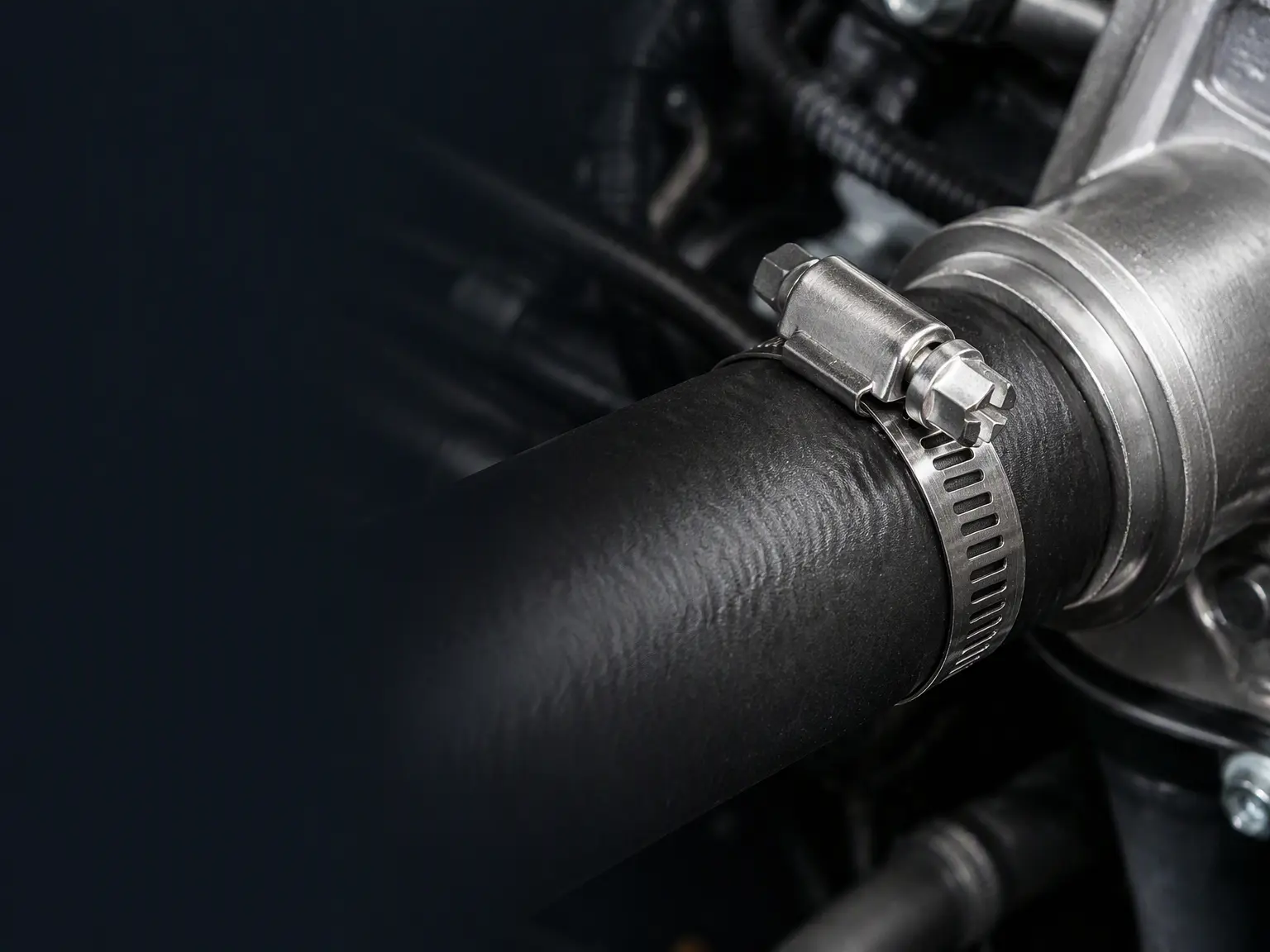
Choosing the correct hose clamp is important for preventing leaks, keeping hoses secure, and maintaining a reliable connection. However, markings such as SAE Hose Clamp Size 28 165 332 can be confusing if you do not know what the numbers represent.
The key is to separate the standard SAE clamp size from any manufacturer-specific product or part number. An SAE size number generally identifies a clamp size category, while a longer sequence of numbers may refer to a product code, measurement, or catalog identifier. You should not assume that every number describes the clamp’s diameter.
This guide explains what SAE size 28 usually means, how to measure your hose, how to select the right clamp, and what to verify before buying. It also highlights an important detail: clamp dimensions can vary by design and manufacturer, so the actual clamping range matters more than the size number alone.
What the Competitor Covers and What This Guide Improves
The supplied article on BlazingMenu discusses the size 28 range, the extra numbers, material choices, installation, and tightening torque. However, the meaning of “165” and “332” is not established by a clearly identified product specification in the article.
Other sizing references, including AFT Fasteners and Zoro, provide useful size charts and explain why the measured diameter and the clamp’s actual range matter. Their charts also illustrate that dimensions can differ by clamp style or manufacturer.
This article improves on that coverage by separating confirmed sizing information from unverified product codes, explaining how to measure the hose correctly, and providing practical selection and installation guidance without treating uncertain numbers as established facts.
What Does SAE Hose Clamp Size 28 165 332 Mean?
The phrase “SAE Hose Clamp Size 28 165 332” does not, by itself, identify one fully verified clamp specification. The three numbers need to be checked against the manufacturer’s product listing or the markings on the clamp.
Here is the safest way to interpret them:
-
28: A recognized SAE hose clamp size designation. Some common full-size worm-drive clamps marked SAE 28 cover approximately 1-5/16 to 2-1/4 inches (about 33–57 mm), although the exact range depends on the product.
-
165: Could be a measurement or part of a product code. The supplied listing does not establish its precise meaning.
-
332: Could be a model, catalog, inventory, or other identifier. It should not be treated as a standardized SAE clamp size without supporting documentation.
The important distinction is that SAE size 28 is a size designation, not a guarantee that every clamp labeled 28 has identical dimensions. Check the stated minimum and maximum clamping diameters before purchasing.
SAE Hose Clamp Size 28: Dimensions and Size Chart
For a typical full-size worm-drive clamp, SAE 28 commonly falls within the range shown below. These are reference dimensions, not a substitute for the specifications of a particular product.
| Specification | Typical reference |
|---|---|
| SAE size | 28 |
| Minimum clamping diameter | About 1-5/16 inches (33 mm) |
| Maximum clamping diameter | About 2-1/4 inches (57 mm) |
| Measurement to use | Outside diameter of the installed hose |
| Common clamp style | Worm-drive or screw clamp |
| Material options | Plated steel and stainless steel, depending on model |
Source: published full-size worm-drive clamp charts.
How Does Size 28 Compare With Other SAE Sizes?
| SAE size | Example clamping range | Approximate metric range |
|---|---|---|
| 24 | 1–2 inches | 25–51 mm |
| 28 | 1-5/16–2-1/4 inches | 33–57 mm |
| 32 | 1-9/16–2-1/2 inches | 40–63 mm |
| 36 | 1-13/16–2-3/4 inches | 46–70 mm |
Ranges are representative of common full-size worm-drive clamps and vary by manufacturer.
A size 28 clamp may suit a hose measuring 1.75 inches across its outside surface, provided the specific clamp’s range includes that measurement. A larger hose may require size 32 or another suitable clamp. Always measure rather than choosing by the hose’s nominal inside diameter alone.
How to Measure a Hose for an SAE 28 Clamp
Selecting a clamp based on the hose’s inside diameter is a common mistake. The clamp fits around the outside of the hose after the hose has been installed on its fitting.
Follow these steps before ordering:

Step 1: Install the hose on its fitting.
Push the hose fully onto the fitting or barb. Its outside diameter may increase as it stretches over the fitting.

Step 2: Measure the outside diameter.
Use a caliper for accuracy. A flexible measuring tape can also help. Measure the hose where the clamp will sit.

Step 3: Check the clamp’s operating range.
Confirm that your measurement falls between the manufacturer’s minimum and maximum diameters.

Step 4: Check the fit before tightening.
The band should sit evenly around the hose, with the screw housing positioned where you can access it safely.
Measuring the installed hose is the most reliable way to narrow down your options.
What Are SAE 28 Hose Clamps Used For?
A size 28 worm-drive clamp may be used in applications where its clamping range and construction are suitable.
Common examples include:
-
Automotive cooling systems: Certain radiator and coolant hoses.
-
Air intake systems: Suitable intake hoses and duct connections.
-
Workshop plumbing: Compatible low-pressure hoses and fittings.
-
Equipment maintenance: General-purpose hose connections.
-
Marine applications: Suitable hose connections when the clamp material is appropriate for moisture and corrosion exposure.
The correct application depends on more than diameter. Hose material, operating temperature, fluid compatibility, vibration, and system pressure all affect clamp selection.
Do not assume that a standard worm-drive clamp is suitable for every fuel, hydraulic, pressurized coolant, or high-pressure air connection. Follow the equipment manufacturer’s specifications and use the approved clamp type.
Stainless Steel vs. Plated Steel Hose Clamps
Material selection can affect a clamp’s service life, particularly in wet or corrosive environments.
| Feature | Plated steel | Stainless steel |
|---|---|---|
| Initial cost | Often lower | Often higher |
| Corrosion resistance | Depends on plating and exposure | Depends on stainless grade |
| Suitable environments | General-purpose applications within specifications | Damp, outdoor, or corrosive environments when properly specified |
| Long-term considerations | Plating can deteriorate | Grade and component construction matter |
When Should You Choose Stainless Steel?
Stainless steel is worth considering for marine equipment, outdoor machinery, and areas frequently exposed to moisture. However, the words “stainless steel” do not necessarily mean every component is made from the same grade.
Check the band, screw, and housing specifications. If corrosion resistance is important, confirm the material grade with the manufacturer.
Perforated vs. Smooth-Band Hose Clamps
The design of the band also matters.

Perforated-band clamps
The screw engages slots in the band. These clamps are widely used for general-purpose hose connections, but the slots can damage some soft or thin-walled hoses if the clamp is unsuitable or overtightened.

Smooth-band or lined clamps
These designs help prevent the hose material from being forced into the band slots. They may be preferable for certain silicone or soft-wall hoses when approved for the application.
Neither design is automatically best for every situation. Match the clamp construction to the hose and the equipment manufacturer’s requirements.
How to Install an SAE 28 Hose Clamp Correctly
A properly sized clamp can still leak if installed incorrectly.
-
Inspect the hose and fitting. Replace cracked, hardened, damaged, or badly deformed parts.
-
Slide the clamp over the hose before connecting the hose if the installation requires it.
-
Push the hose fully onto the fitting.
-
Position the clamp over the fitting’s intended clamping area, following the equipment manufacturer’s instructions.
-
Tighten the screw gradually with the appropriate tool.
-
Check that the band sits evenly and that the hose is not pinched, cut, or visibly distorted.
-
Test the connection under the specified operating conditions and check for leaks.
How Tight Should an SAE 28 Clamp Be?
There is no single tightening torque that applies to every SAE 28 clamp. The correct value depends on the clamp design, material, screw, and manufacturer’s instructions.
Avoid using a generic torque figure simply because another clamp has the same SAE size. Excessive tightening can damage the hose, strip the screw, or deform the fitting. Insufficient tightening can allow leakage or hose movement.
Use a torque specification only when the manufacturer provides one for the exact clamp model and application.
What Do the Numbers 165 and 332 Mean?
This is the most important unresolved part of the search phrase.
The supplied article suggests that 165 may relate to the maximum diameter of a much larger clamp and that 332 may be a product identifier. However, it does not provide sufficient product documentation to establish either interpretation conclusively.
To identify these numbers accurately:
-
Check whether they are stamped on the metal band or printed only on the packaging.
-
Look for a manufacturer name, model number, or complete part number.
-
Find the manufacturer’s catalog entry for that exact product.
-
Compare the published clamping range, band width, material, and clamp type.
-
Ask the seller to clarify the meaning of 165 and 332 if the listing does not explain them.
Do not purchase a clamp based solely on the phrase “28 165 332.” Confirm the actual product specification first.
Common Mistakes to Avoid
Here are several mistakes that can lead to a poor fit or an unreliable connection.
-
Buying by SAE number alone: Verify the manufacturer’s diameter range.
-
Measuring the bare hose: Measure the outside diameter at the installed clamping location.
-
Assuming 165 means 165 mm for every product: Confirm the unit and context.
-
Treating 332 as an SAE size: Verify whether it is a model or catalog identifier.
-
Overtightening the screw: Follow the clamp manufacturer’s instructions.
-
Ignoring corrosion: Choose suitable materials for the environment.
-
Using a general-purpose clamp in a high-pressure system: Use the specified clamp design and pressure-rated components.
Frequently Asked Questions
1. What size is an SAE 28 hose clamp?
A common full-size SAE 28 worm-drive clamp covers approximately 1-5/16 to 2-1/4 inches (33–57 mm). Check the manufacturer’s specifications because ranges vary.
2. Does SAE 28 mean 28 mm?
No. SAE 28 is a size designation, not a direct measurement of 28 mm. Its clamping range is substantially larger.
3. What does 165 mean in SAE hose clamp size 28 165 332?
Its meaning cannot be confirmed from the phrase alone. It could refer to a measurement or product-specific code. Check the original product listing or manufacturer documentation.
4. What does 332 mean on a hose clamp listing?
There is insufficient verified information to identify 332 as a standardized SAE dimension. It may be a product or catalog identifier, but confirmation from the seller or manufacturer is needed.
5. How do I know whether an SAE 28 clamp will fit my hose?
Measure the hose’s outside diameter after it is fitted to the connection. Then compare that measurement with the clamp’s published minimum and maximum diameter.
6. Can I use an SAE 28 clamp on a radiator hose?
Yes, if its clamping range, construction, temperature rating, and other specifications are suitable for that particular radiator hose and application. Follow the vehicle or equipment manufacturer’s requirements.
7. Is a stainless steel hose clamp better?
Stainless steel can offer better corrosion resistance than plated steel, depending on the grade and construction. The best option depends on the operating environment and the required performance.
8. Can I reuse a hose clamp?
Some screw-type clamps are reusable if they remain undamaged and the manufacturer permits reuse. Replace clamps that are corroded, distorted, stripped, or unable to tighten securely.
9. Should I use a torque wrench on a hose clamp?
Use a torque tool when the manufacturer specifies a tightening torque. Otherwise, follow the manufacturer’s installation procedure rather than applying an unrelated torque value.
10. Is SAE 28 suitable for high-pressure hoses?
Not automatically. Clamp size alone does not establish pressure capability. Use a clamp and hose assembly specifically approved for the operating pressure and application.
Conclusion
The phrase SAE Hose Clamp Size 28 165 332 combines a recognizable clamp size with two numbers whose exact meaning has not been verified.
For a typical full-size worm-drive clamp, SAE 28 commonly corresponds to a clamping range of approximately 33–57 mm. However, the actual range, material, band design, and application requirements must be checked before purchase.
Measure the outside diameter of the installed hose, verify the manufacturer’s specifications, and follow the recommended installation procedure. If you need to identify the complete “28 165 332” designation, the original product label or manufacturer part number is the best place to start.